 Back to all Cases
Real-Time Management System for Transportation Networks
A web-based event management platform designed for a national transportation network, enabling real-time incident handling, response coordination, and system configuration. The project modernized outdated desktop operations, improved collaboration between regional teams, and integrated seamlessly with existing backend infrastructure to enhance public safety and traffic efficiency.
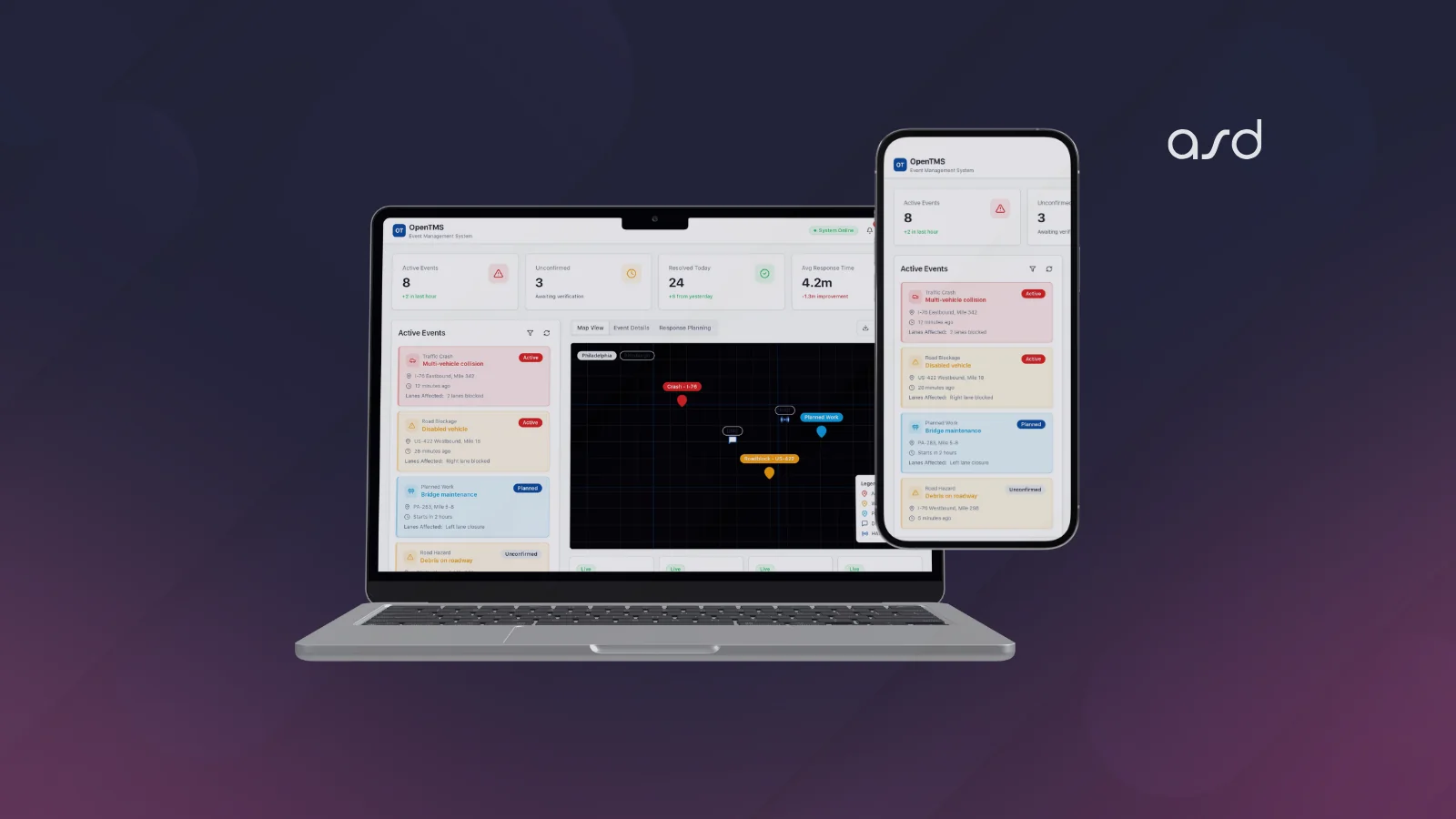


Our client’s old desktop tool for managing traffic incidents was outdated. They needed modern, web-based event management built into their platform while coordinating with a separate backend team.
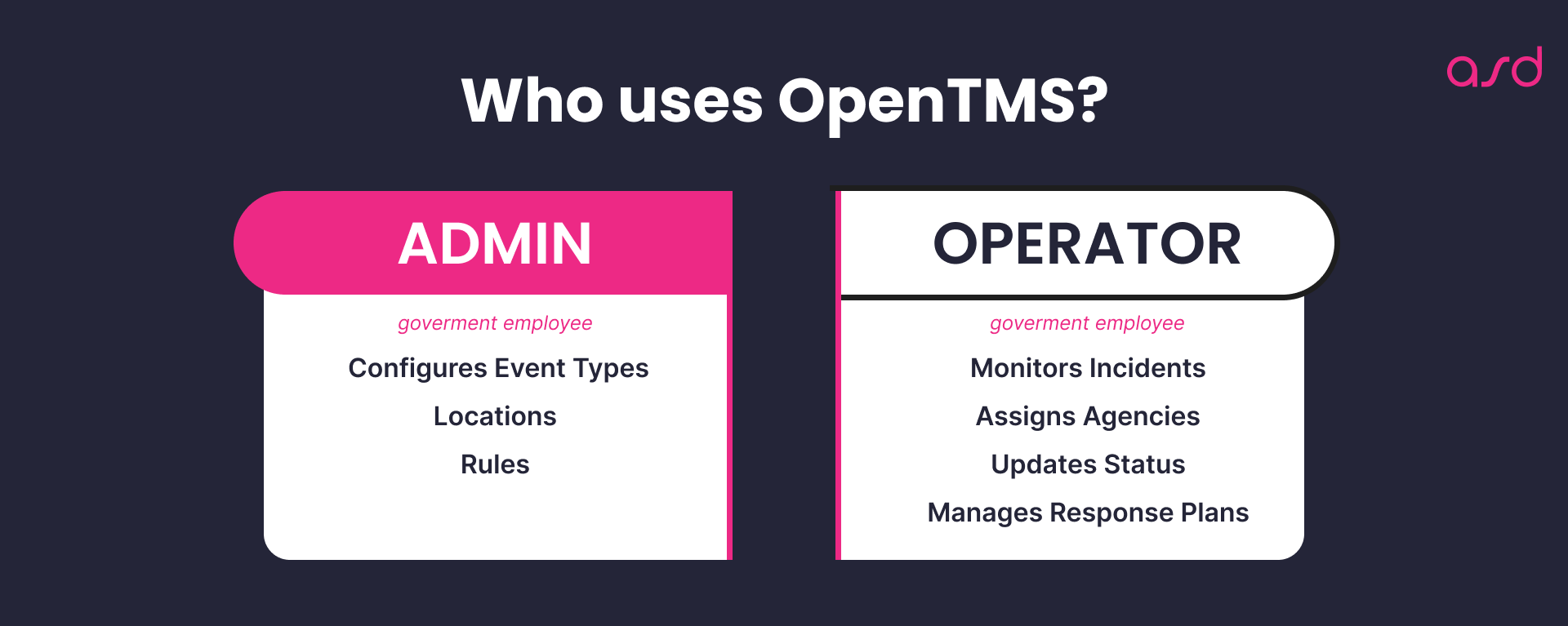
- Methodology: Kanban workflow with a discovery-first roadmap.
- Collaboration: Frequent syncs with the client’s backend team to align API priorities.
- Adaptability: Since backend APIs were delayed and sometimes unstable, we developed a mock server that allowed frontend progress independent of backend blockers.
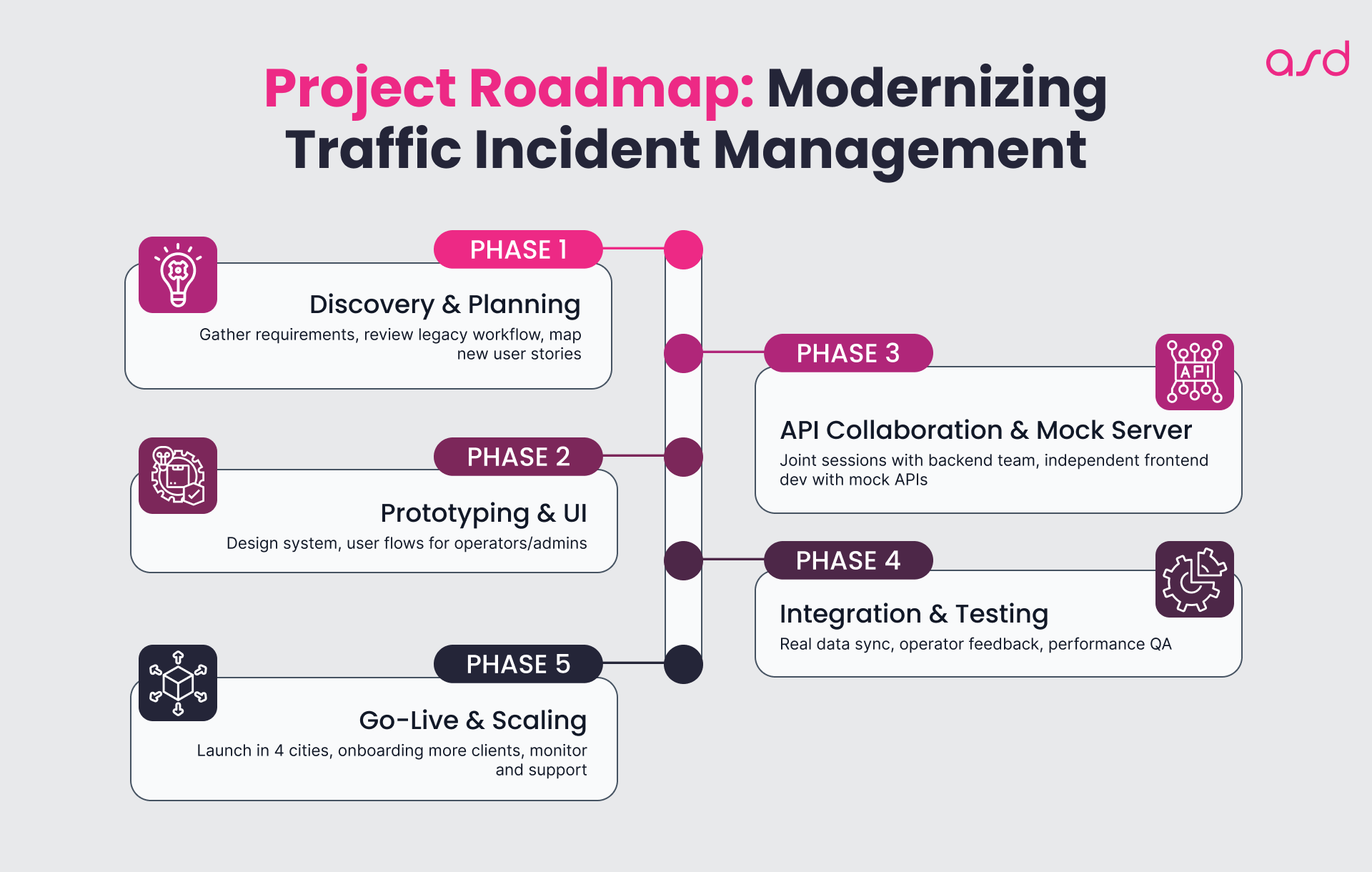
- Defined user roles: administrators configuring EM and operators managing events in real time.
- Mapped new workflows against the legacy desktop system to maintain feature parity while improving usability.
- Prioritized most business-critical features (admin EM configuration, operator workflows, and response planning).
- Configured detailed event parameters such as types, statuses, injury categories, weather conditions, and comment categories.
- Created and managed county- and roadway-level reference points with interactive map visualization.
- Managed agencies, activities, and traffic management organizations while tracking procedural errors.
- Built and configured templates for Dynamic Message Signs (DMS), Highway Advisory Radio (HAR), and automated emails.
- Implemented a message-fit algorithm to calculate message display on DMS boards.
- Developed an admin panel to map devices and virtual nodes to specific locations used in operator workflows.
- Supported full event lifecycle with Active, Unconfirmed, Planned, and Closed states.
- Enabled editing event attributes, assigning agencies, and managing operational details from a unified event page.
- Visualized affected lanes using a dynamic Lane Map to mark open and blocked lanes.
- Created event-specific response plans, including DMS messages, HAR activation, and predefined email alerts with timeline mapping.
- Integrated a geospatial map view displaying event icons, linked traffic devices, and directional flow indicators for better situational context.
- Lane Map Widget: Custom UI for specifying lane type and status.
- Dynamic Messaging Widget: Operators could craft messages with text, colors, and images while ensuring compliance with device length restrictions.
- Maps Integration: Unified display of EM events, devices, and virtual nodes in a geospatially aware dashboard.
- Resilient Development Process: Built a mock server to emulate backend APIs, decoupling frontend progress from backend delays.
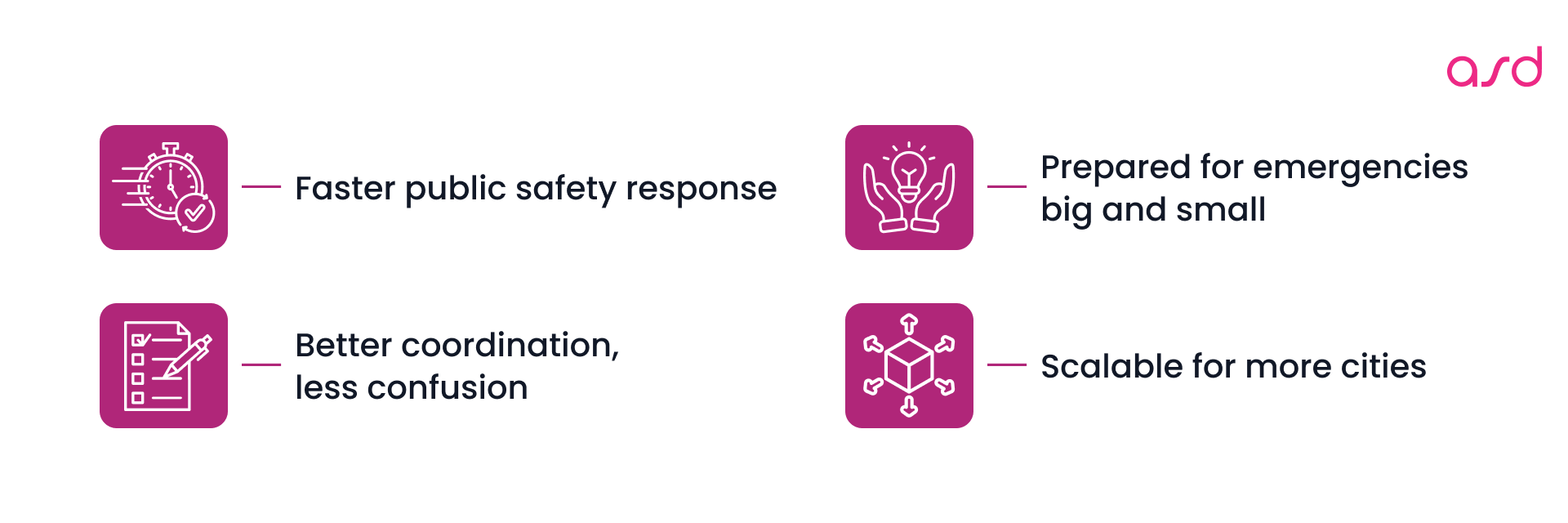
By delivering the EM subsystem within OpenTMS, the client`s operators gained a single, intuitive platform for managing traffic incidents and planned works in real time.
- Enhanced Public Safety: Faster response times to road incidents improve safety for drivers and responders.
- Reduced Congestion: Quicker operational tools help restore traffic flow.
- Preparedness for Emergencies: Configurable workflows and response plans empower agencies to handle both day-to-day incidents and large-scale events (e.g., major sports or international gatherings).
- Scalable Integration: With OpenTMS already aggregating data from four major cities (and more underway), our client now has a robust platform that continues to expand.
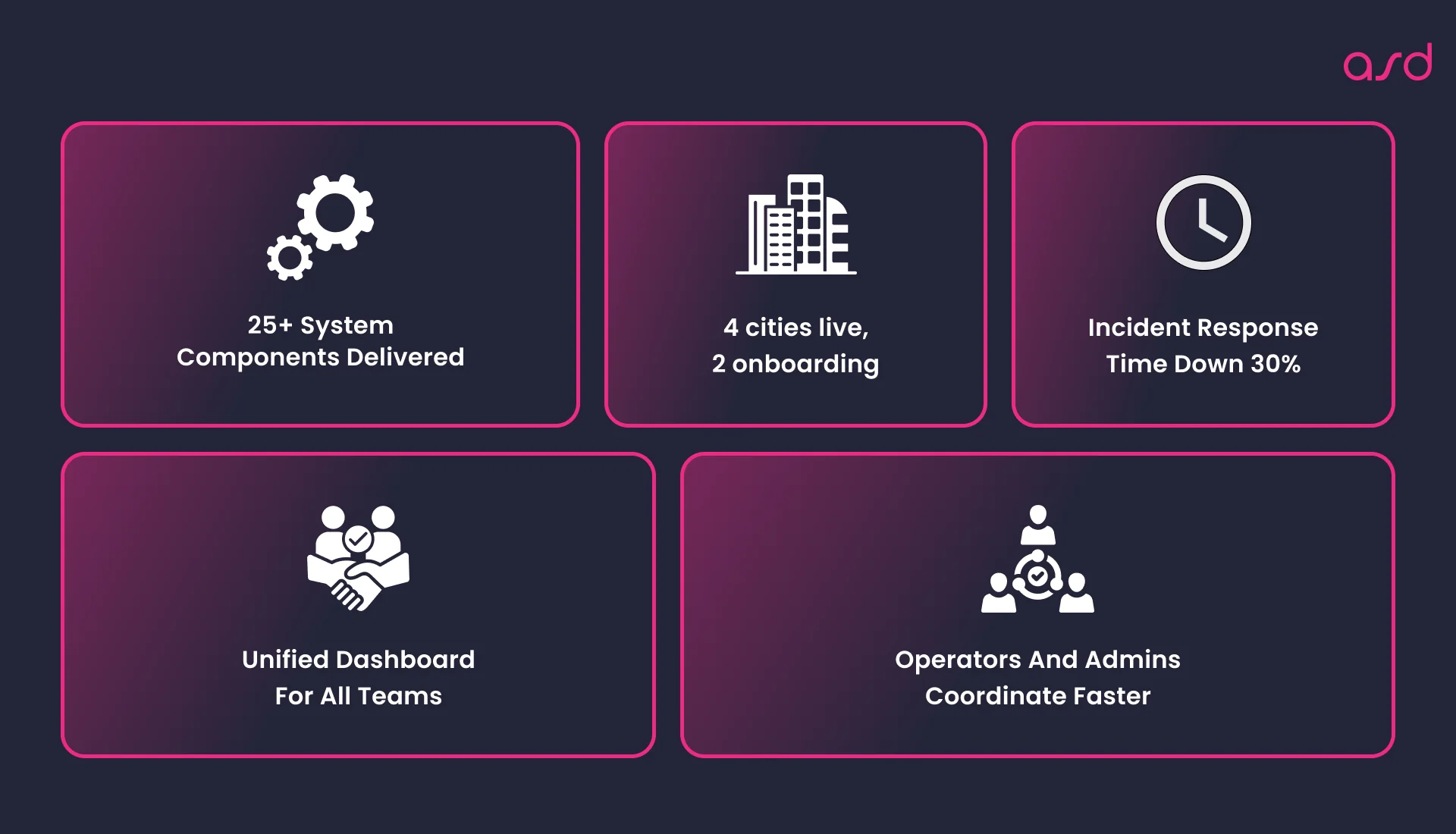
- Subsystem Features Delivered: 25+ configurable components across Admin & Operator workflows.
- Cities Integrated with OpenTMS: 4 live, 2 in progress.
- Primary Users: City traffic management operators and clients’ administrators.
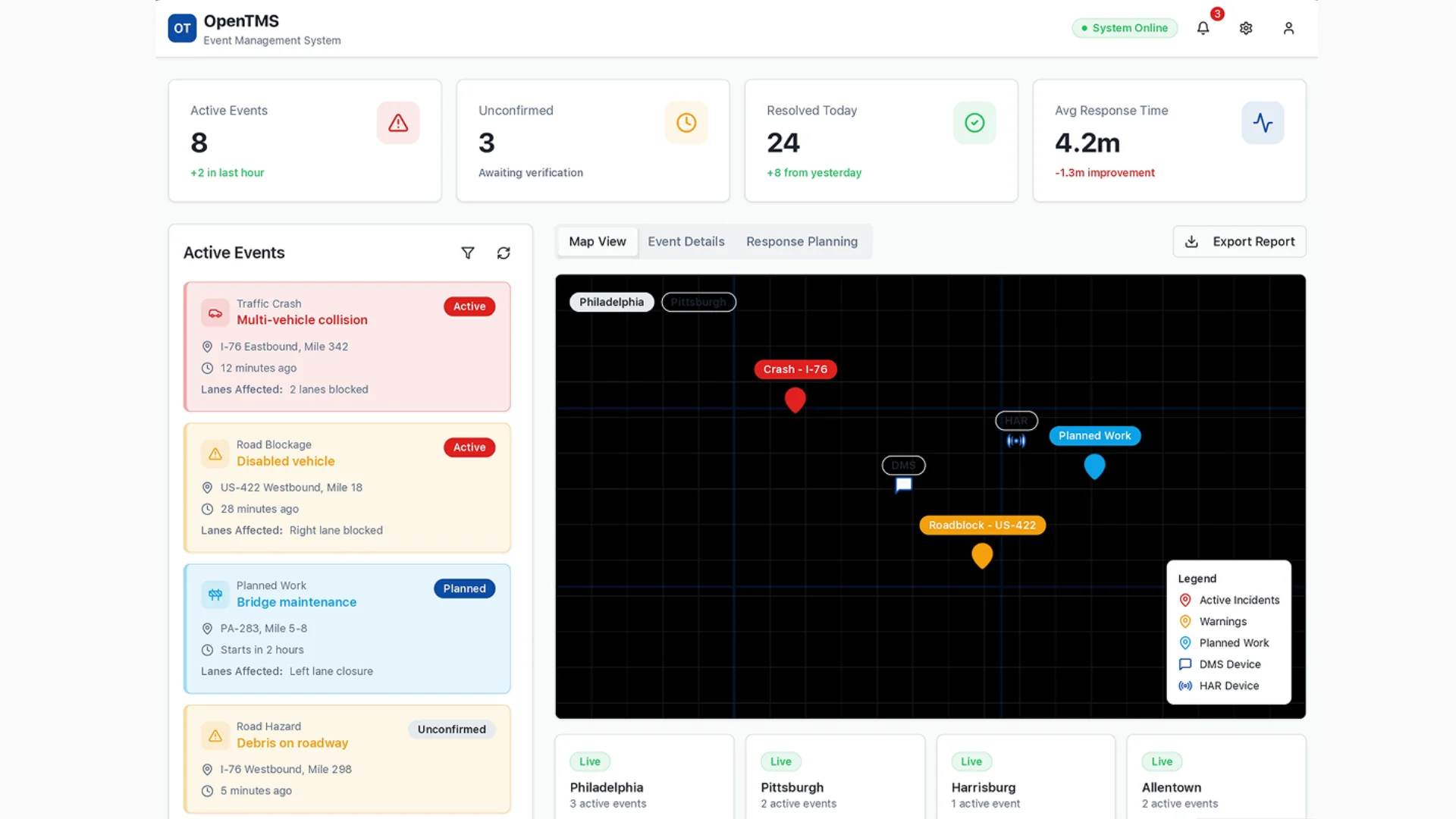
So now, when there’s an accident or roadwork, our client’s team doesn’t scramble between different tools or paper notes.
- Operators see exactly what’s happening, plan responses in real time, set up alerts, and visualize every lane, device, and agency right on the map.
- Admins can configure new event types or locations in a snap. Even if backend updates lag behind, the frontend keeps things running smoothly thanks to a clever mock server.
What does this mean? Quicker action, clearer communication, and smarter decisions – making roads safer and traffic smoother, whether it’s a busy Monday or a city-wide event. With OpenTMS now live in four cities (and more coming), their whole network is ready for anything that hits the road next.