
Table of Content
- What is a Project Transition Plan?
- We Know Why You Want to Handover Software Project
- The Uniqueness of Software Project Transition
- Benefits of a Transition Plan
- Key Challenges of Software Project Transition Plan
- Post-Transformation Risks
- How ASD Team Mitigates Risks in Handover
- Transition Planning
- Transition Process
- Best Practices for a Successful Transition
- Conclusion
Ready for project transition?
Book a callSwitching software vendors mid-project is rarely clean – but it doesn’t have to derail everything. A structured transition plan covers knowledge transfer, coding standards, documentation, and dependency mapping so the new team can continue where the old one left off without losing momentum.
You will have to face a software project transition at least once; if not, just wait a little bit.
Imagine: You’re leading a software project that’s been in the works for months. Your team has invested countless hours, expectations are high, and you’re looking forward to seeing results. But suddenly, you hit a wall. The original team—perhaps a freelancer juggling multiple clients or an agency that didn’t fully understand your goals—starts missing deadlines, or worse, delivers work that falls short of your needs. Communication falters, progress stalls, and frustration builds.
The next step becomes clear: you need to find other contractors to continue developing your project. But what should have been a straightforward switch now feels like you’re steering through a storm, unsure of where to start. It’s a familiar scenario, isn’t it? Whether due to shifting priorities, skill gaps, or simply a need for a fresh perspective, the transition often feels overwhelming. At ASD Team, we understand these challenges and are here to ensure your transition experience is as seamless as possible.
What is a Project Transition Plan?
A project transition plan is a strategic document that outlines the steps, goals, and timeline for transitioning a project from one phase to another or from one team to another. It serves as a vital tool in project management, ensuring a smooth and successful transition by minimizing disruptions and maintaining quality, efficiency, and progress, which is especially important in software project rescue situations. This plan helps identify potential risks and uncertainties, providing a framework for effective knowledge sharing and transfer. By clearly defining the transition process, a project transition plan ensures that all stakeholders are aligned and prepared for the changes ahead, ultimately leading to a successful transition.
Why Do Teams Switch Software Vendors Mid-Project?
-
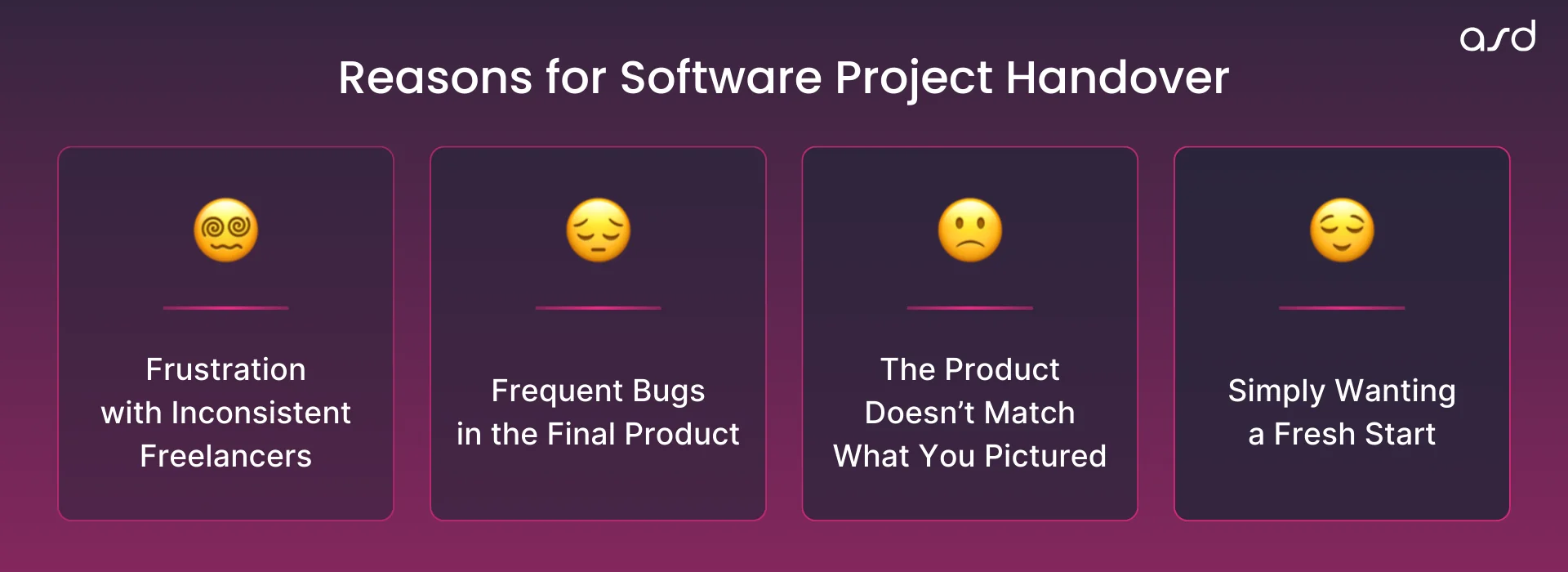
Frustration with Inconsistent Freelancers
Sometimes, you get trapped in a cycle with freelancers who don’t consistently meet expectations, miss deadlines and cause software development delays. This trial-and-error approach can be exhausting and leaves projects without the steady progress and quality improvement needed for success.
-
Frequent Bugs in the Final Product
When developers rely on self-testing, it often results in bugs and quality issues slipping through the cracks. This not only affects the final product but also damages client confidence in the team’s ability to deliver consistently. If your team is consistently falling behind on bug fixes and you’re fed up with the constant issues, it may be time to bring in a new team that can get the job done right.
-
Outcome Mismatch
Another common frustration arises when freelancers fail to clarify requirements thoroughly, leading to misaligned deliverables. This can result in a lot of rework and delays as the final product doesn’t meet expectations. Ensuring clear communication and proper documentation from the start can prevent these kinds of mismatches and avoid unnecessary headaches.
-
Simply Wanting a Fresh Start
Sometimes, you simply want a change, and that is an absolutely valid desire. Whether it’s due to a poor working relationship, unmet expectations, or a desire for new perspectives, the need for a fresh start with a different development team can drive the decision to initiate a handover.
Looking for hassle-free handover to a capable development team?
ASD Team is ready to step-up and elevate your project right now
Book free consultation
What Makes a Software Project Transition Different From a Regular Handover?
As we speak about software projects specifically, you should understand, that this particular transition isn’t as simple as passing the baton. A software transition focus not only on general objectives and timelines, but dives into the technical depths, even more when it’s set in the Travel Tech industry. Here, it’s all about getting the new team up to speed on the codebase, development environments, and specific coding standards without skipping a beat.
It’s not just handing over documentation; it’s about sharing the inner workings, testing procedures, and tools essential for smooth operation. Plus, there’s an added layer of security and data integrity that needs special attention. So, while a regular project handover is about handing over goals, a software transition of product development is about embedding the new team into a technical ecosystem—every detail matters to keep the project on track without a glitch.
What Are the Benefits of a Structured Transition Plan?
A well-crafted transition plan offers numerous benefits that can significantly impact the success of a handover software project. Firstly, it reduces anxiety and uncertainty among team members by providing a clear roadmap for the transition process. This clarity helps identify challenges and roadblocks early on, allowing for proactive solutions. Additionally, a transition plan streamlines operations by ensuring that all necessary steps are taken in a structured manner, minimizing disruptions. It also prepares the organization for future changes, establishing financial security for employees and ensuring a successful project outcome. In essence, a transition plan is essential for project management, as it provides a structured framework for the handover process, minimizes potential risks, and ensures a smooth transition.
How Should You Prepare Before Starting a Software Project Transition?
-
Assessing the Current State
Projects that skip a formal current state assessment are 2× more likely to face scope disputes with the new vendor in the first month.
Before diving into the transition process, it’s crucial to take a step back and assess the current state of your software project. This initial evaluation sets the stage for a successful transition by helping you understand the project’s demands and nuances. Start by identifying the exact reasons for wanting to change your provider. Are missed deadlines, poor feature implementation, or overpricing the main issues? Or perhaps it’s the lack of experienced developers and inconvenient communication that’s driving the change?
Evaluate the current vendor’s performance meticulously. Look at their track record with your project: have they consistently missed deadlines or delivered subpar features? Overpricing and inexperienced developers can also be significant red flags. Additionally, assess the project’s complexity, considering the number of stakeholders involved, the technical requirements, and any potential risks that could arise during the transition phase.
Identify the key resources that need to be transferred to the new vendor. This includes comprehensive documentation, the existing codebase, and any other assets critical to the project. By thoroughly understanding the current state, you can ensure a smoother transition process and set the new vendor up for success.
- Creating a Business Strategy
A well-defined business strategy is the backbone of a successful transition. This strategy should clearly outline the goals and outcomes you hope to achieve with the new vendor. Start by defining your business strategy, including specific objectives and requirements for the new vendor. What are the key deliverables, and what standards must be met?
Determine the time frame for transferring each stage of the software development process from the current vendor to the new one. This timeline should be realistic yet ambitious, ensuring that the transition phase is as efficient as possible without compromising quality. By having a clear business strategy, you can align the new vendor with your vision and expectations, paving the way for a successful transition.
- Selecting a New Vendor
Selecting a new vendor is a critical step in the transition process. This decision can make or break the success of your software project transition. Start by determining the most essential criteria for making your final decision. Consider factors such as the vendor’s experience, expertise, and reputation in the industry.
Evaluate the supplier’s location, and software developers’ hourly rates, for example, IT outsourcing to Ukraine will be cheaper, compared to the USA, and the level of developers they offer, and still stand in 2026. Don’t forget to account for any additional costs that might arise. Conduct a comparative analysis of proposals from potential vendors to ensure you choose the best fit for your project. By carefully selecting a new vendor, you can ensure a smooth transition and set the stage for future success.
If a project transition slows development, our Software Project Rescue Services can help get it back on track
- Current State Analysis
Conducting a current state analysis is a crucial step in creating an effective transition plan. This analysis involves evaluating the current state of the project, including the vendor’s value, associated risks, and the cost of contract termination. By understanding these factors, you can identify the reasons for transitioning to a new vendor and set clear expectations for the new supplier. A thorough current state analysis helps avoid potential nuances and challenges that may arise during the transition process. It provides a solid foundation for the transition plan, ensuring that all aspects of the project are considered and addressed.
What Are the Biggest Challenges in a Software Project Transition?
All of that brings us to the key challenges of a project transition plan from one vendor to another. So that boat in the middle of the storm from the beginning? Keep in mind — every decision matters and the stakes are high as you navigate the waves. Okay, let`s overview what causes such a mess in software project handover:
-
Difficulty Finding Reliable Developers
Struggle to find dependable developers or contractors who can seamlessly integrate into their existing processes. You may want minimal disruption and a streamlined workflow but often encounter vendors who require substantial process changes.
-
Uncertainty About the Ideal Setup
When you are unsure what the “perfect” setup should look like, it becomes difficult to find a solution with confidence. You may wish for minimal changes but lack a clear vision of the optimal team structure or development workflow.
-
Overwhelming Market Options
With so many choices — from freelancers to agencies — clients often feel lost in a sea of options, unsure where to start or how to find a partner who will truly “fit” and efficiently address their needs without unnecessary disruption. When planning a transition to a new team, picking the right development partner is critical. See our guide “How to Choose a Software Development Partner” for key criteria.
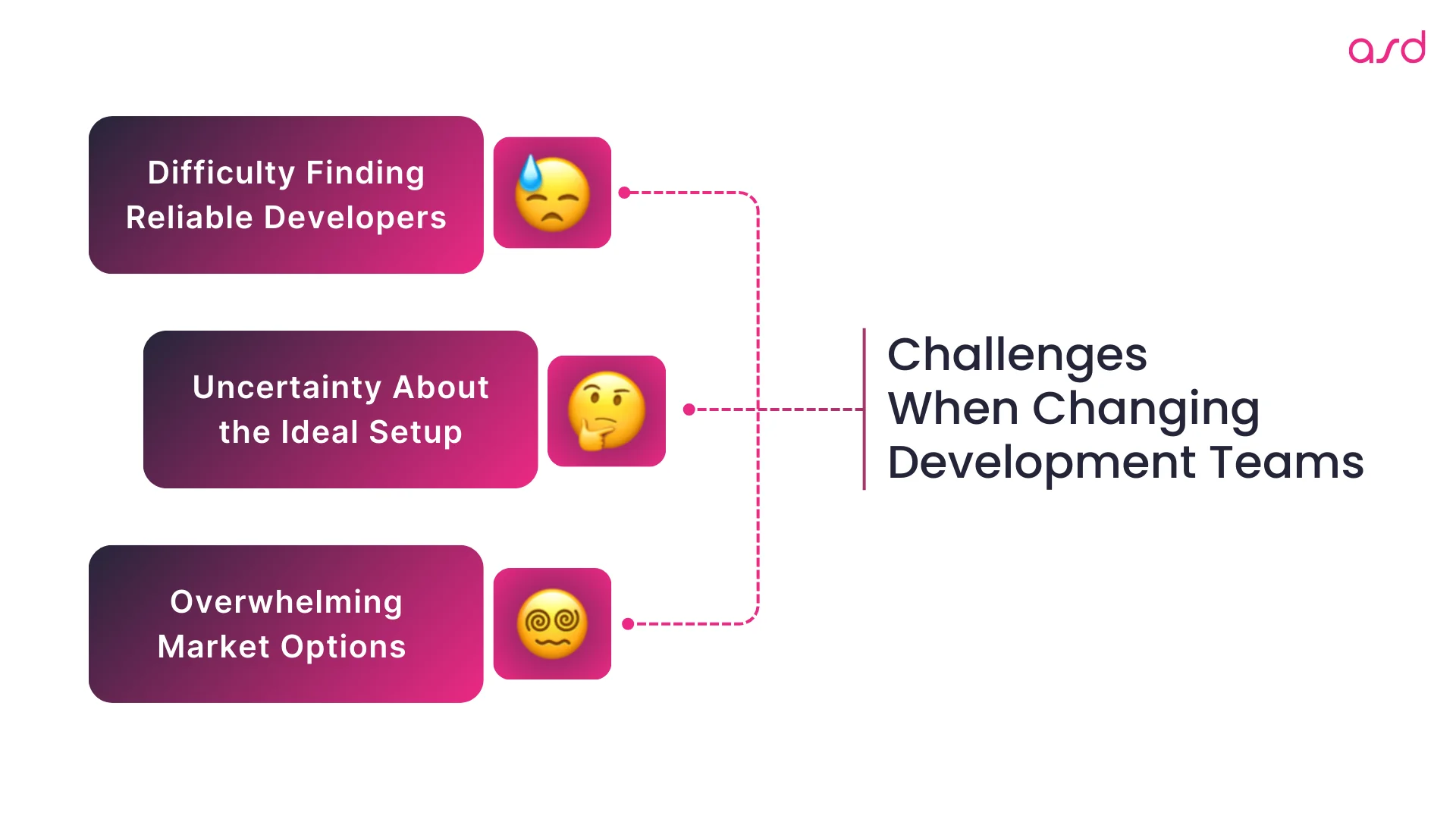
Each of these hurdles adds to the complexity, turning what should be a straightforward transition into a multi-layered operation, and eventually should help to speed up software development. This is why a rock-solid transition plan is crucial — so you don’t end up tossed around by every unexpected wave. A project transition plan checklist can be an invaluable tool to ensure a smooth handover and mitigate risks such as delays and miscommunication.
Already Found a New Team, Now What?
Post-Transformation Risks
After the project transition, certain risks can emerge if not proactively managed:
-
- Divergent Coding Standards and Management Styles:
Think of it as trying to blend two different recipes into one dish. If one team codes with one style and the new team has a different approach, it’s a recipe for confusion and added work to harmonize these differences.
-
Incomplete or Messy Documentation:
You’ll often find yourself dealing with missing details or outdated notes, like trying to read a treasure map with half the missing pieces. This lack of clarity makes it challenging for the new team to pick up where the old one left off.
-
Communication Gaps Between Teams:
A successful transition depends on solid communication, but more often than not, the outgoing team is left with radio silence. Misunderstandings or poor handover meetings can turn what should be a smooth shift into a complete guessing game.
-
Inconsistent Testing Processes:
When testing standards are poorly defined or unaligned, bugs slip through the cracks, and quality takes a hit. The new team may not even know where to start fixing things without a clear testing framework.
-
Unexpected Dependency Issues:
Some dependencies may be so deeply embedded that only the old team fully understands them. Uncovering these hidden connections can feel like defusing a bomb without a manual.
-
Security and Data Privacy Concerns:
With sensitive data on the line, the slightest misstep in securing systems or sharing data can lead to vulnerabilities, making security a high-priority challenge in any handover. You can never be overcautious when it comes to cybersecurity. Especially now, in 2026, with AI-generated code increasingly present in vendor workflows, security audits during handover should explicitly include a review of AI-assisted code for unverified libraries and hallucinated dependencies.
| Scenario | Without a Transition Plan | With a Transition Plan |
| Knowledge transfer | New team reverse-engineers codebase | Structured sessions, documented handover |
| Coding standards | Conflicts between old and new approaches | Unified standards established upfront |
| Documentation | Missing, outdated, or scattered | Reviewed, updated, handed over |
| Dependency discovery | Found in production — too late | Mapped before transition begins |
| Ramp-up time | 4–8 weeks | 1–2 weeks |
| Security risks | Unmanaged access, unclear permissions | Access audit done before handover |
How ASD Team Mitigates Risks in Handover
ASD Team uses a detailed transition plan to minimize these risks and ensure a successful handover:
-
Unified Coding Standards:
We ensure coding styles are streamlined early on, creating harmony between development teams and avoiding unnecessary rewrites.
-
Software Development Process:
We maintain a structured software development process, using agile methods, regular code reviews, and continuous integration to ensure smooth, consistent progress.
-
Thorough Documentation Review and Update:
By carefully reviewing and updating documentation, ASD provides clarity and continuity, equipping the new team with comprehensive insights.
-
Structured Handover Communication:
Regular, structured communication between the outgoing and incoming teams is a priority, eliminating radio silence and ensuring clear knowledge transfer.
-
Standardized Testing Protocols:
ASD aligns testing standards from the outset, so the new team can effectively assess quality without missing crucial checks.
-
Dependency Mapping:
ASD conducts a detailed dependency analysis, identifying and documenting key connections that need attention during transition.
Unsure about the next steps for your project transition? Schedule a free consultation with ASD Team to discuss your needs, challenges, and how we can make the process effortless.
 Pavlo Boiko
CEO
Pavlo Boiko
CEO
How Do You Make a Software Project Handover Actually Smooth?
Knowledge transfer sessions typically take 3–5 days for mid-size projects. Skipping them adds an average of 2–4 weeks to the new team’s ramp-up time.
In navigating a project handover and transition phase in software project management, two possible scenarios often emerge: you either have all the key resources in place from the start, or you’re stepping in with limited information, scrambling to find the pieces as you go. So, let’s dive into these two scripts, to ensure that you can find the needed information.
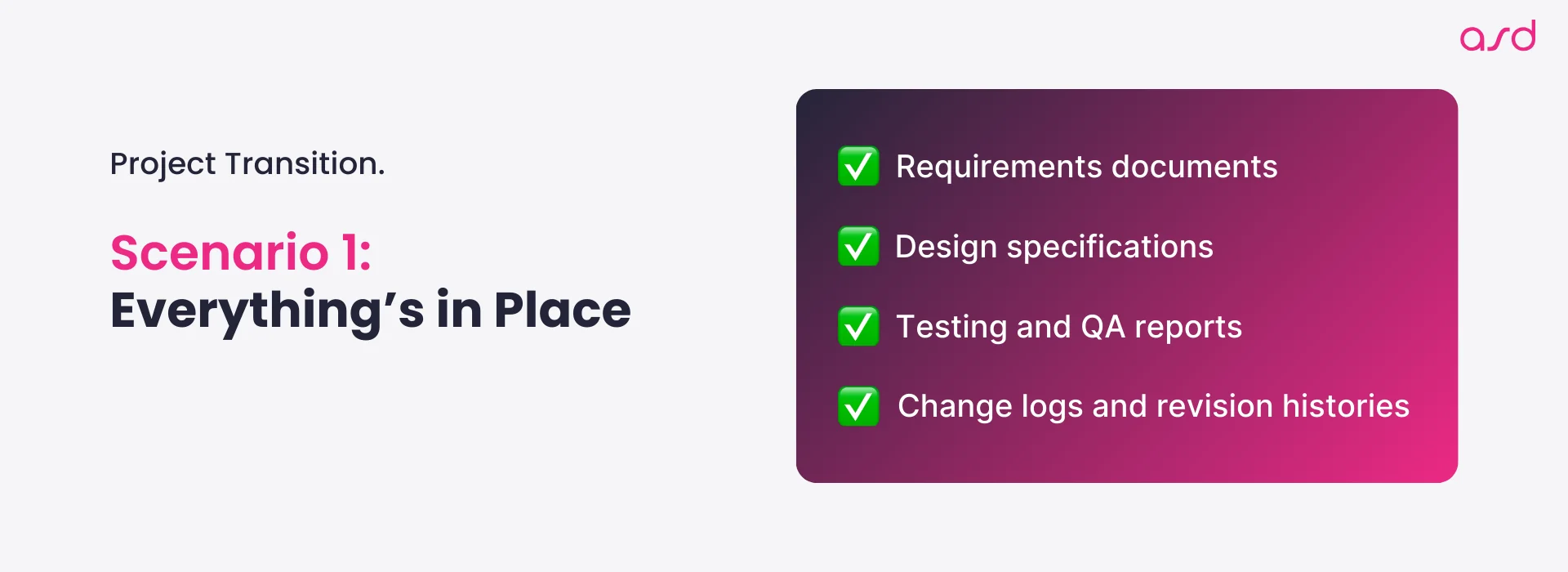
Scenario 1: Everything’s in Place
You are already ahead if you have detailed documentation, clear timelines, and a project outline. Here’s how to make the most of it:
- Conduct a Full Knowledge Transfer:
Organize sessions where the outgoing team explains all documents, tools, and workflows. Encourage questions to ensure the incoming team understands everything and avoids mistakes.
- Create an Onboarding Checklist:
Make a checklist that includes all resources, system access, and key milestones. This will help the new team confirm they are aligned with the project’s goals and standards.
- Set Clear Milestones for Transition:
With a strong foundation, set short-term goals to help the new team adapt and progress without major issues.
When you partner with ASD Team, we will take charge of organizing the entire transition process, ensuring it’s as seamless as possible:
- Organize and lead knowledge transfer sessions so that all documents, tools, and workflows are clearly explained to the incoming team.
- Provide a thorough onboarding checklist to cover resources, system access, and project milestones.
- Set and monitor clear, achievable milestones for a smooth transition, guiding the new team as they adapt.
With our expertise, the transition becomes efficient and structured, letting you focus on your core business without worrying about the handover details.
Scenario 2: Caught Off Guard
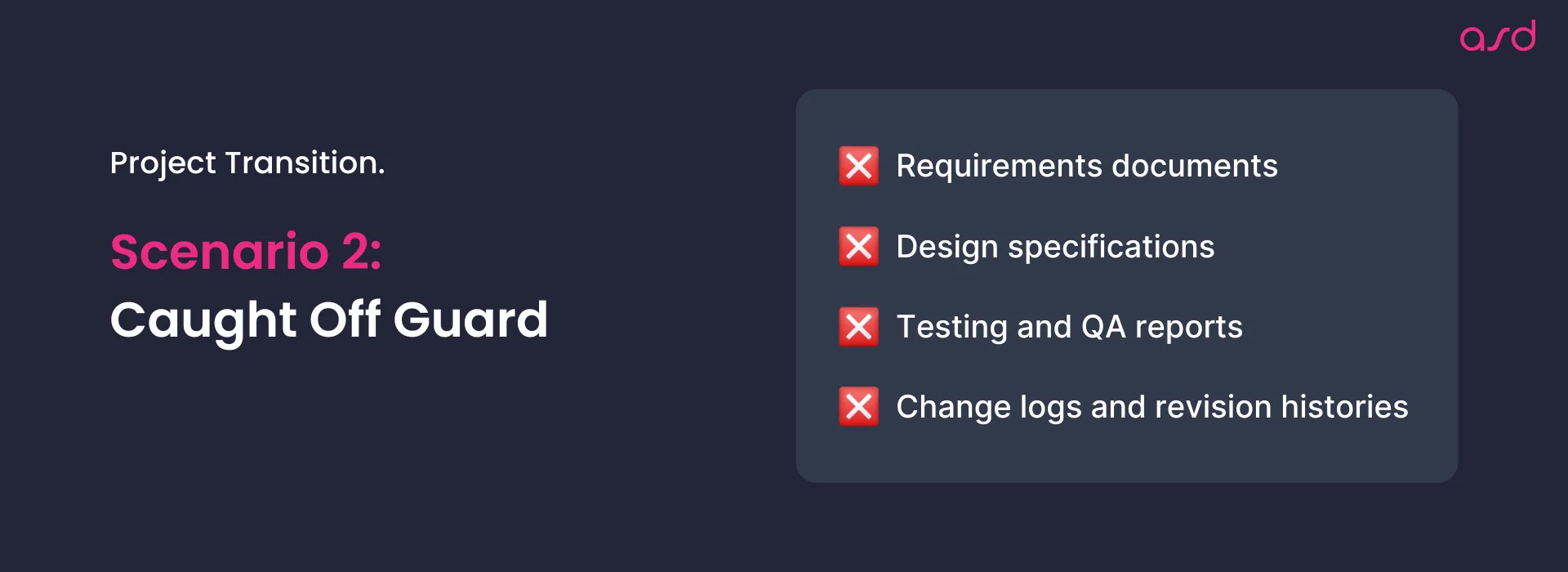
If you begin a project without proper documentation or guidance, don’t worry. You can still get things on track:
- Identify Knowledge Gaps and Prioritize:
Start by listing what you don’t know—what is missing or unclear. Focus on filling these gaps first.
- Engage in Reverse Engineering:
Reverse engineering can help the new team understand how things work without detailed documentation for unclear code or undocumented processes.
- Establish Communication Channels for Ongoing Support:
During the early transition phase, try to keep communication open with members of the outgoing team. They can answer questions or clarify things that need more documentation.
Software Project Transition Plan (Checklist)

What Does Effective Transition Planning Look Like?
Transition planning is the process of creating a detailed transition plan that outlines the steps, goals, and timeline for the project transition. This involves defining the project objectives, scope, and timeline, ensuring that all stakeholders are aligned and prepared for the changes ahead. Effective transition planning is essential for a successful project outcome, as it helps reduce disruptions and maximize the chances of success. By establishing clear objectives and a structured framework, transition planning ensures that the project team is well-prepared and equipped to handle the transition smoothly. This process also helps establish financial security for employees, providing a sense of stability and confidence during the transition.
How Does the Transition Process Work Step by Step?
The transition process involves several key steps, including planning, knowledge transfer, and the completion of the project. Effective communication is crucial throughout this process, with clear roles and responsibilities defined for all team members. A structured framework for the handover process ensures that all necessary steps are taken, minimizing the risk of project delays and failures. The transition process should be treated as a project in itself, with a proper plan and regular meetings to monitor progress and address any issues that arise, especially in everything from payment processing for travel industry to first documented code line. By following a well-defined transition process, you can ensure a smooth and successful transition, maintaining the quality and efficiency of the project.
What Are the Best Practices for a Successful Software Transition?
A successful transition requires meticulous planning, efficient communication, and a tactical approach. Here are some best practices to ensure a smooth transition:
- Develop a Detailed Transition Plan
Create a comprehensive project transition plan that includes a clear timeline, tasks, and stakeholders. This plan should outline every step of the transition process, ensuring that nothing is overlooked.
- Inform All Stakeholders
Keep everyone in the loop, including employees, customers, and partners. Clear communication is key to managing expectations and ensuring a smooth transition.
- Transfer Knowledge and Assets
Ensure that all project specifications, code documentation, asset transfers, development credentials, and deployment procedures are handed over to the new vendor. This knowledge transfer is crucial for maintaining continuity.
- Test and Verify
Conduct thorough testing to ensure that everything works as expected. This step is essential to catch any issues early and ensure a smooth transition.
- Manage the Process Closely
Monitor progress against the transition plan, addressing any issues that arise promptly. Close management minimizes risks and maximizes the benefits of the transition.
By following these best practices and creating a comprehensive project transition plan, you can ensure a successful transition and minimize disruptions to your software project.
We hope this guide has provided valuable insights and practical tools, from crafting a detailed software project handover document to leveraging a robust software project handover checklist. With these resources — whether it’s a comprehensive software project handover checklist template in Excel or a customized software project handover document template — equip you to confidently manage any transition.
But more importantly, remember that with ASD Team as your partner, you have the support to turn even the most challenging transitions into growth opportunities. Whether it’s bringing innovative software solutions to the market, managing custom API integrations, capturing market share, winning new clients, boosting revenue, or securing investor confidence, our team is here to help you achieve it all. Your journey with ASD Team isn’t just about successful transitions; it’s about paving the way for continuous success and strategic growth.
ASD Team provides a clear transition, including checklists and document templates, to help clients switch vendors without disruption and turn the process into a growth opportunity.
Switching vendors may be necessary if the current team can’t meet deadlines, maintain quality, or align with your goals. A new team can bring fresh expertise and ensure the project runs smoothly.
Key challenges include differences in coding styles, incomplete documentation, communication issues, unclear testing processes, hidden dependencies, and data security concerns. Tackling these can make the handover smoother.
A checklist covers all necessary steps—like documentation, knowledge transfer, and access permissions—to ensure that no new team is fully prepared and nothing is missed.
A good handover document contains software development requirements, design details, testing reports, key contacts, access permissions, and technical documentation to help the new team get started.
How does ASD Team assist with project transitions?
ASD Team is a software development partner specializing in vendor transitions, custom integrations, and project rescues for SaaS and travel tech products – with structured processes that turn a chaotic handover into a clean start. If you’re mid-transition and need a second opinion, a free project estimation is a practical starting point.
What information should a handover document include?
A good handover document contains software development requirements, design details, testing reports, key contacts, access permissions, and technical documentation to help the new team get started.
How does a handover checklist help in the transition process?
A checklist covers all necessary steps—like documentation, knowledge transfer, and access permissions—to ensure that no new team is fully prepared and nothing is missed.
What are the biggest challenges when transitioning a software project?
Key challenges include differences in coding styles, incomplete documentation, communication issues, unclear testing processes, hidden dependencies, and data security concerns. Tackling these can make the handover smoother.
Why would I need to switch vendors for a software project?
Switching vendors may be necessary if the current team can’t meet deadlines, maintain quality, or align with your goals. A new team can bring fresh expertise and ensure the project runs smoothly.
Show more


Related Articles:
How to Choose a Development Partner for Your Travel Tech Project
9 mins
•
02 Mar 2025

Software development delays: Why do your projects end up late?
19 mins
•
15 Feb 2025
The role of the requirements in software development
18 mins
•
10 Feb 2025
We use cookies to personalize our services and improve your experience on this website. We may use certain personal data for analytics and marketing purposes.
Let’s Talk
Fill out the form to schedule a 30-minute call, where we’ll discuss your project requirements and explore the best solutions for your needs.
Free Consultation